
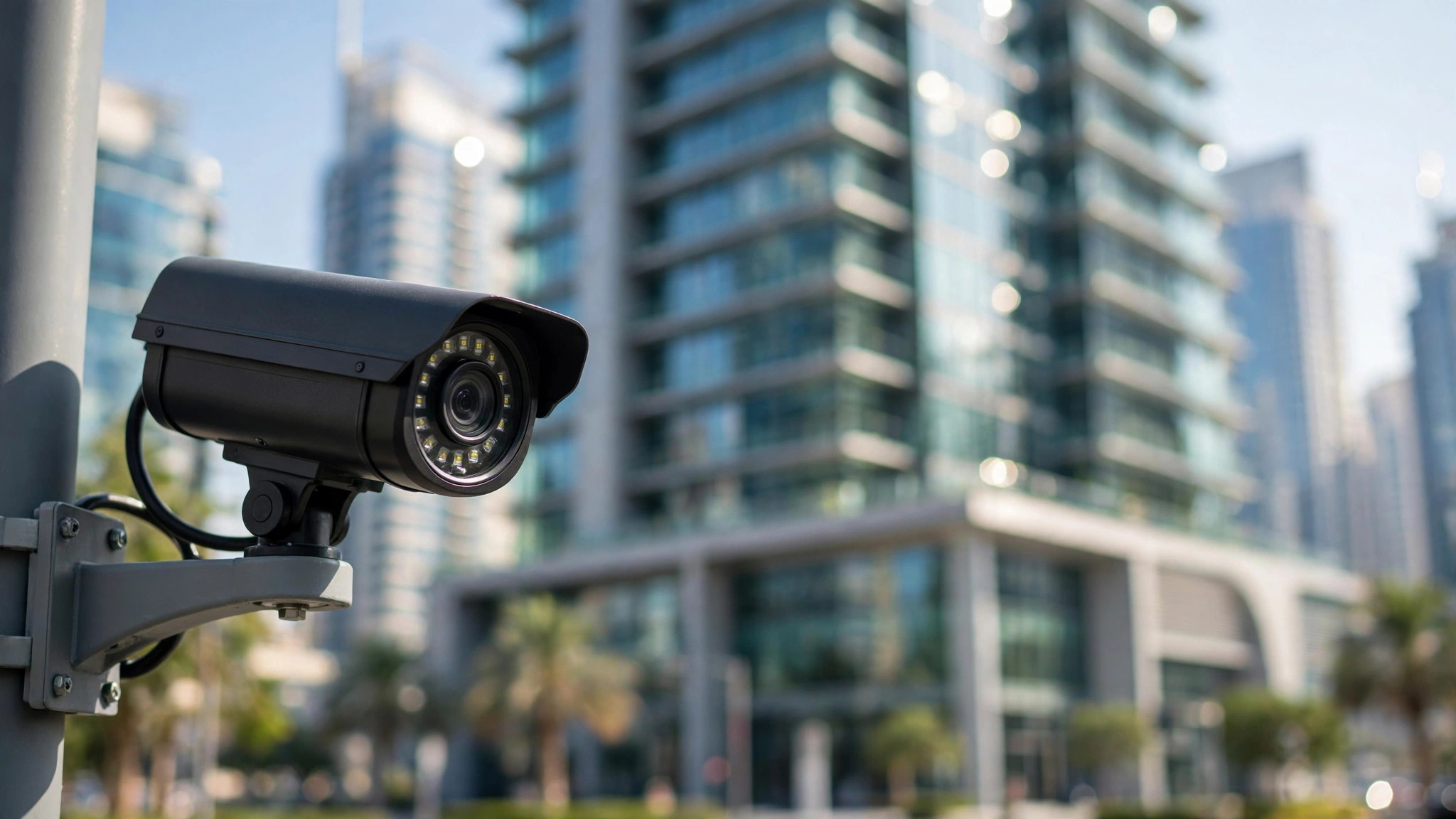
For most businesses, the gate is the weakest point of the whole security setup: a guard with a clipboard, a barrier that goes up on a wave, and no reliable record of which vehicles came and went. Automatic Number Plate Recognition — ANPR — changes that. A camera reads every plate, checks it against a list, and the gate opens for authorised vehicles without a guard having to decide anything. This guide explains how it works, where it pays off, and what to get right on installation day.
How ANPR actually works
An ANPR camera combines a high-resolution image sensor with software that finds the number plate in the frame and reads the characters using optical character recognition. Dedicated ANPR cameras do this on board, in the camera itself; other setups run the recognition on the recorder or a server. Either way, the result is the same: a text record of the plate, a timestamp, and a snapshot of the vehicle, stored alongside your normal CCTV footage.
The read quality depends on the capture, not just the software. The camera needs a clear, well-lit view of the front or rear of the vehicle, at a sensible angle — too steep and the characters distort. Night is the hard case: headlights can blow out the image, which is why proper ANPR cameras use shutter speeds and IR lighting tuned for plates rather than general scenes. If a vendor quotes you a standard bullet camera for plate reading at night, keep looking.
Where businesses get the value
- Office buildings and business towers: staff vehicles on a whitelist drive straight through; the barrier stays closed for everyone else. No queues at shift change, no guard bottleneck.
- Warehouses and logistics yards: every truck in and out is logged with a timestamp — useful for delivery disputes, theft investigations, and dock scheduling.
- Retail and showrooms: track repeat visits and manage staff parking without issuing dozens of remotes or cards.
- Gated compounds and labour accommodation: replace easily-shared remote controls with plates that can't be lent to someone else.
The pattern is the same everywhere: where vehicle access is frequent and trust matters, plates beat tokens.
Whitelists, blacklists and what happens at the gate
The recognition itself is only half the system — the other half is the logic attached to it. Most installations run on lists:
- Whitelist: plates that may enter. Staff, regular suppliers, management. The barrier opens automatically.
- Blacklist: plates that should be flagged — vehicles of concern, contractors whose access has expired. The system alerts instead of opening.
- Everyone else: the barrier stays down and the guard gets a pop-up with the plate and a snapshot, so they can make an informed decision and log the visitor properly.
ANPR usually sits alongside your access control and barrier rather than replacing it. The camera reads the plate, the controller decides, the barrier moves. Keep a manual override — a working intercom or guard console — because no system should strand a vehicle when something fails.
What to plan before installation
- Capture point and speed: mount the camera where vehicles slow down or stop — at the barrier, not 30 metres down the approach road. ANPR is rated for specific speeds; a gate camera aimed at free-flowing traffic will miss plates.
- One plate or two: capturing entry plates is standard; adding exit capture gives you dwell time (how long each vehicle stayed) and closes the loop for visitor logging.
- Plate formats: UAE plates vary — standard private plates, commercial, diplomatic, northern-emirate styles. Confirm with your installer that the recognition engine handles the formats you'll actually see.
- Lighting and power: ANPR cameras need stable power and clean IR at night. PoE simplifies this: one cable carries power and data.
- Network and storage: plate reads, snapshots and video all land on your NVR or server. Size storage for your retention target and make sure the plate database is backed up with the rest of the system.
- Integration: decide up front what the system must talk to — the barrier controller, the intercom, the VMS, a visitor-management tablet. Retrofitting integrations after the camera is mounted costs more than planning them.
Data: handle plates like the sensitive records they are
A plate log is a record of people's movements, so treat it accordingly: restrict access to the plate database to named staff, define how long you keep records, and delete old data rather than hoarding it. Keep the recognition system on your own network — ideally segmented from the office LAN — and change default passwords on cameras and recorders before the system goes live.
Common mistakes
- Using a general-purpose camera: a wide-view overview camera will not read plates reliably, especially at night. ANPR is a dedicated capture.
- Mounting too high or too far: distance and angle are the two things that kill read rates. Follow the manufacturer's capture-range guidance.
- No plan for unlisted vehicles: every whitelist has exceptions — guests, taxis, delivery drivers. Decide the fallback workflow before go-live.
- Skipping maintenance: a dirty IR illuminator or a shifted bracket degrades read rates silently. Plate-read accuracy should be part of your CCTV maintenance checklist.
Done well, ANPR removes the busiest friction point in your physical security and leaves you with a vehicle log that no clipboard ever produced. Done badly, it's an expensive camera that opens the gate for nobody.
Considering number plate recognition for your gate or car park? Request a quote, call us on (04) 359 4874, or message us on WhatsApp at +971 52 562 1946 for a free site survey — we'll assess your entry points, recommend the right ANPR setup for your traffic, and handle the barrier integration end to end.